
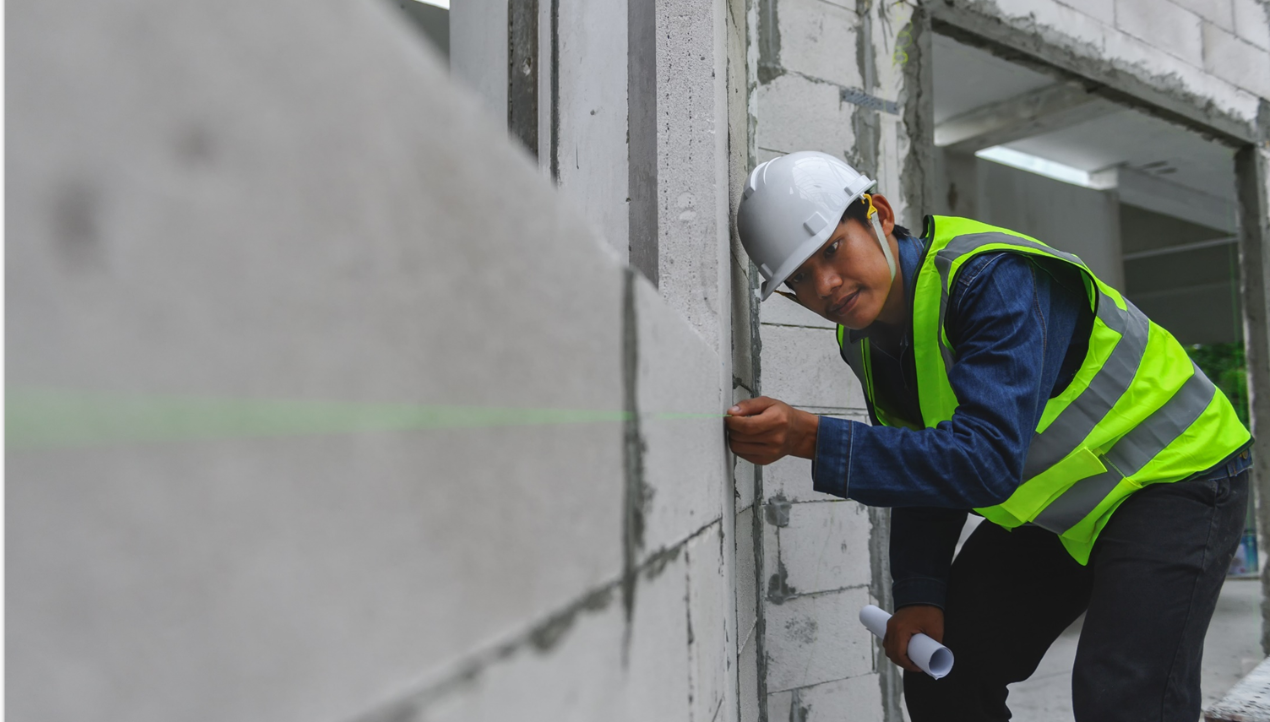
Autoclaved Aerated Concrete (AAC) blocks are a revolutionary building material that has transformed the construction industry. Known for their lightweight composition, excellent thermal insulation properties, and eco-friendliness, AAC blocks are increasingly favoured over traditional materials. In the ever-evolving landscape of construction materials, Autoclaved Aerated Concrete (AAC) blocks have emerged as a game-changer, offering a blend of strength, versatility, and sustainability. As the construction industry seeks to balance efficiency with environmental responsibility, AAC blocks stand out due to their unique properties and innovative design. These lightweight blocks are not only easy to handle and install but also provide superior thermal insulation and fire resistance, making them an ideal choice for a wide range of applications.
The size of AAC blocks plays a pivotal role in their functionality and adaptability. With a range of standard dimensions available, builders can select the appropriate size to meet specific structural requirements and design preferences. This flexibility allows for creative architectural solutions while ensuring that the integrity and performance of the building are not compromised.
Moreover, the increasing demand for energy-efficient buildings has further propelled the popularity of AAC blocks. Their cellular structure not only reduces energy consumption but also enhances indoor comfort by maintaining stable temperatures. As sustainability becomes a priority in construction worldwide, AAC blocks offer an eco-friendly alternative to traditional materials, aligning with efforts to reduce carbon footprints and promote green building initiatives.
“Various Applications of Brixo AAC Blocks.”Jane Cooper
AAC blocks are versatile and can be utilised across various sectors within the construction industry:
Residential Buildings
AAC blocks are increasingly popular in residential construction due to their lightweight nature and thermal efficiency. They provide excellent insulation, which is crucial for maintaining comfortable indoor temperatures while minimising energy consumption. Homeowners benefit from lower utility bills and a more sustainable living environment.
Commercial Structures
The versatility in sizes makes Brixo AAC blocks suitable for constructing commercial buildings such as offices, shopping centres, and hotels. Their ability to provide sound insulation is particularly valuable in urban settings, where noise pollution can be a problem. Additionally, the quick installation time allows businesses to minimise downtime during construction.
Industrial Projects
Due to their strength and durability, Brixo AAC blocks are also employed in industrial projects such as warehouses and factories. Their fire resistance properties make them ideal for structures that require compliance with stringent safety regulations. The lightweight nature also reduces overall foundation load, which can be particularly beneficial in large-scale industrial applications.
Standard Sizes of Brixo AAC Blocks
AAC blocks come in various sizes to meet different construction needs. One key factor contributing to their versatility and usability is their size. The dimensions are typically standardised to facilitate ease of use and compatibility with various building designs. AAC blocks represent a significant advancement in building materials, offering a range of sizes that cater to diverse construction needs. Their lightweight nature, thermal insulation, design flexibility, and reduced construction time make them an attractive option for modern construction projects.
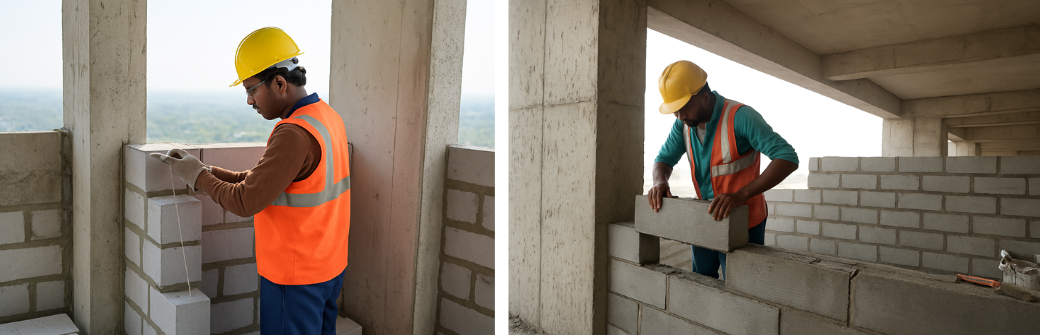
Walls Thickness and Brixo AAC Block
100 mm or 125 mm thick Brixo blocks – Used mostly for interior partition walls or infill masonry that isn’t load-bearing. They are lightweight and maximise floor space usage.
150 mm or 200 mm thick Brixo blocks – Often used for exterior and interior walls, depending on the height of the walls, walls in high-rise frames, or for multi-story external walls where loads are moderate.
225 mm or 300 mm thick Brixo blocks – Bigger-width blocks are used in heavy walls. These are Common in institutional, commercial, and hospital airports and are mostly used for external walls, as well as in low-rise construction, such as bungalows (G+1 or G+2 buildings). We advise using AAC blocks for load-bearing walls under the guidance of a structural consultant.
Also used for high-rise walls or fire walls where sturdiness is needed. Ideal for taller structures or heavy-duty walls, where additional thickness adds strength and thermal mass.
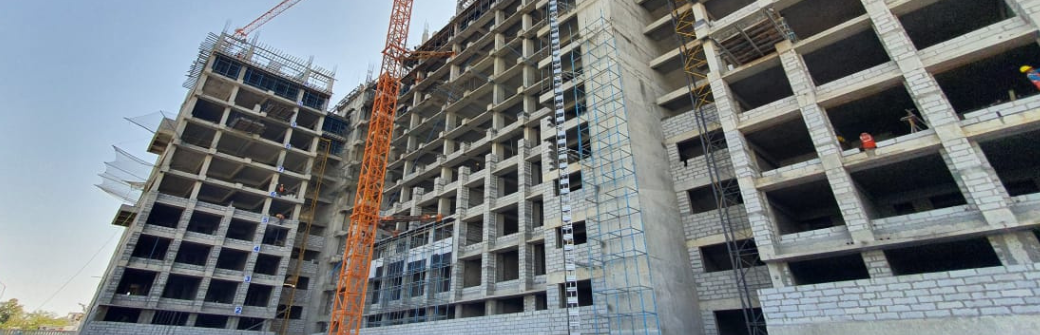
As demand for sustainable, efficient building materials continues to grow, AAC blocks are poised to play an increasingly important role in shaping the future of the construction industry. By understanding the various sizes and advantages of AAC blocks, builders can make informed decisions that enhance both the efficiency and sustainability of their projects. It is well known that building with AAC panels can reduce the total cost of ownership for the final consumer.